Adding fake reviews to an Amazon product to increase its credibility is a common practice. Manufacturers pay writers/freelancers to write up fake reviews to make their product look good or a rival’s product look bad to the customers. Manufacturers also give free products in exchange for an honest review (that’s legal, by the way), but some of these reviews may also be fake/biased.
In all these fake attempts to sell the product, the customer is always the one who has to pay the price. So as a customer, how can you protect yourself from fake reviews and buy a product based on honest reviews? There is no surefire way to separate fake reviews from honest ones, but you can identify most of the fake reviews with some common factors. In this post we will show you how to identify fake Amazon reviews and shop smartly.
Tips to Identify a Fake Review
Below we have listed some factors that can prove a review to be fake.
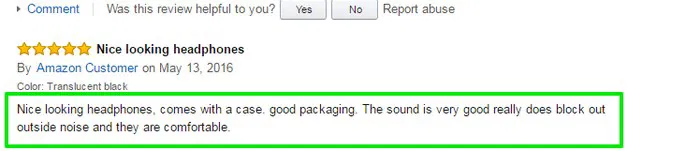
Review Length
Paid reviews are usually four to five lines long simply because the reviewer doesn’t have much information to share as he/she didn’t test the product. Also, the reviews usually aren’t too short, as the manufacturer paying for the fake review requires a good description from the reviewer. I have also seen people asking for fake reviews on freelance sites, and they mostly write in the description that they need reviews four to five lines long.
Check Vague Tone
Most fake reviews usually consist of vague words that don’t actually tell what a product can really do, like “good,” “amazing,” “the best,” “excellent” or “very bad,” “pathetic,” “waste of money,” etc.
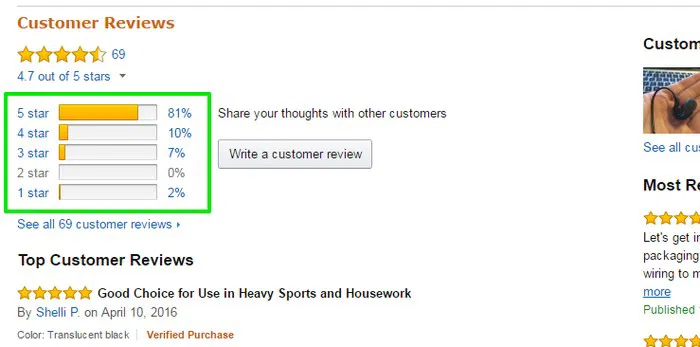
Check Rating
Fake reviewers mostly give a five-star or one-star rating of the product. This isn’t a good way to detect a fake review, but combined with other factors in this list, it creates a good base.
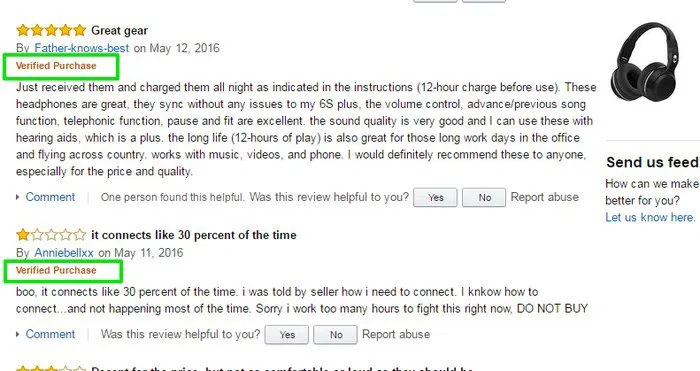
Check Verified Purchase
Amazon shows a “Verified Purchase” button below the reviewer’s name, meaning they actually bought the product from Amazon. This is a solid factor that may mean that the review is honest. However, there is also a chance that the product was received for a discount price in exchange for a review. (It may be a fake one as well.) On the other hand, not having a “Verified Purchase” button doesn’t confirm that a review is fake because the user might have bought the product from another retailer.
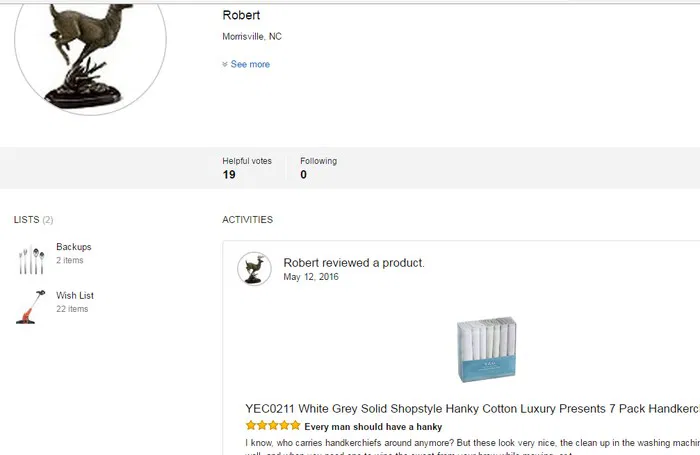
See the History of a Reviewer
If you click on the name of a reviewer, you will be able to see their complete profile along with their recent reviews. If you see they constantly write negative or positive reviews with the same tone, then there is a good chance that their reviews are fake. Also, if they reviewed multiple products in a short period – like three to four products per day – then they might be being paid for the fake reviews.
All these above factors alone might not be able to prove a review is fake, but combined they could become solid evidence.
Always do your own search and then buy the product. If you know any other ways to spot a fake Amazon review, do let us know in the comments below.